


Most gumboots are made from one of two materials: natural rubber or PVC (polyvinyl chloride, a petroleum-based plastic). The difference between the two shapes everything about how the boot wears, lasts, fits and feels on your foot.
So, when it comes to rubber versus PVC gumboots, natural rubber is the clear winner if comfort, durability and how long your boots last actually matter to you. PVC has its place for very low-cost, light-use needs, but for boots you’ll genuinely live in (on a school run, around the paddock, through a wet winter), natural rubber wins on every count that matters.
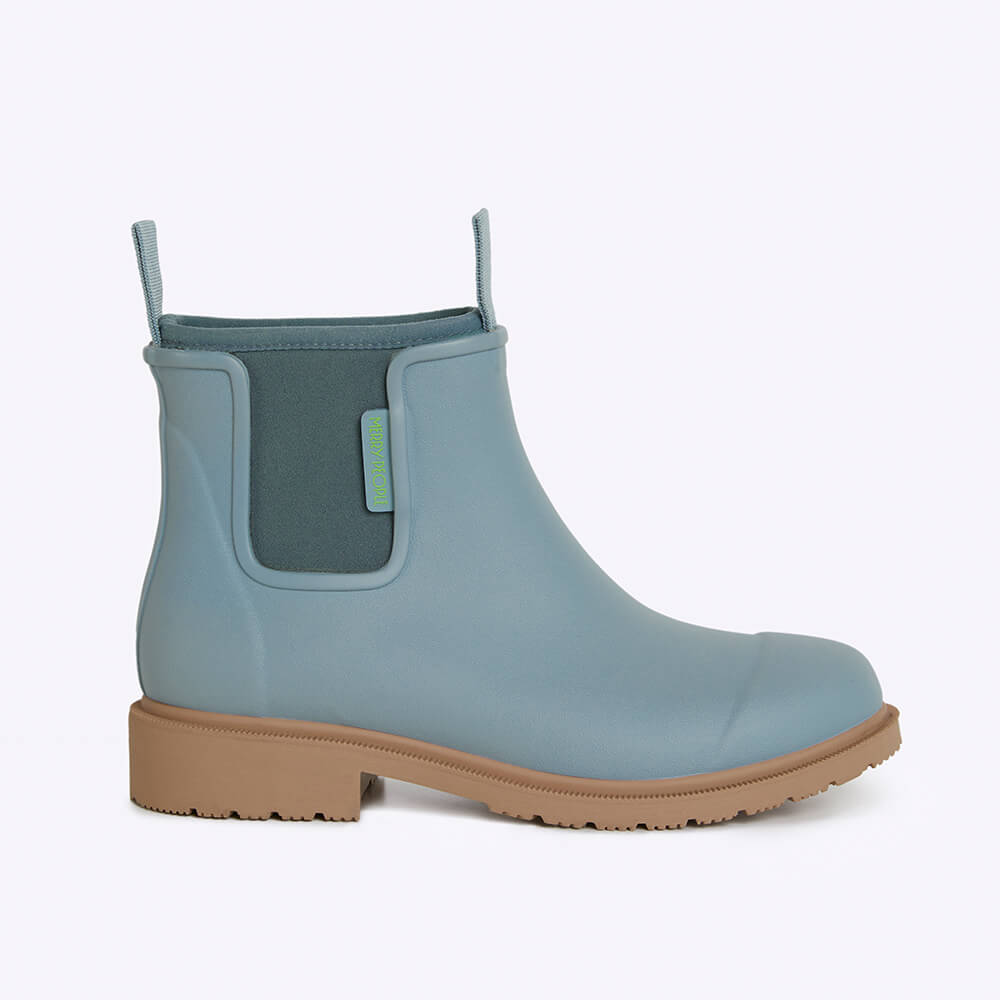
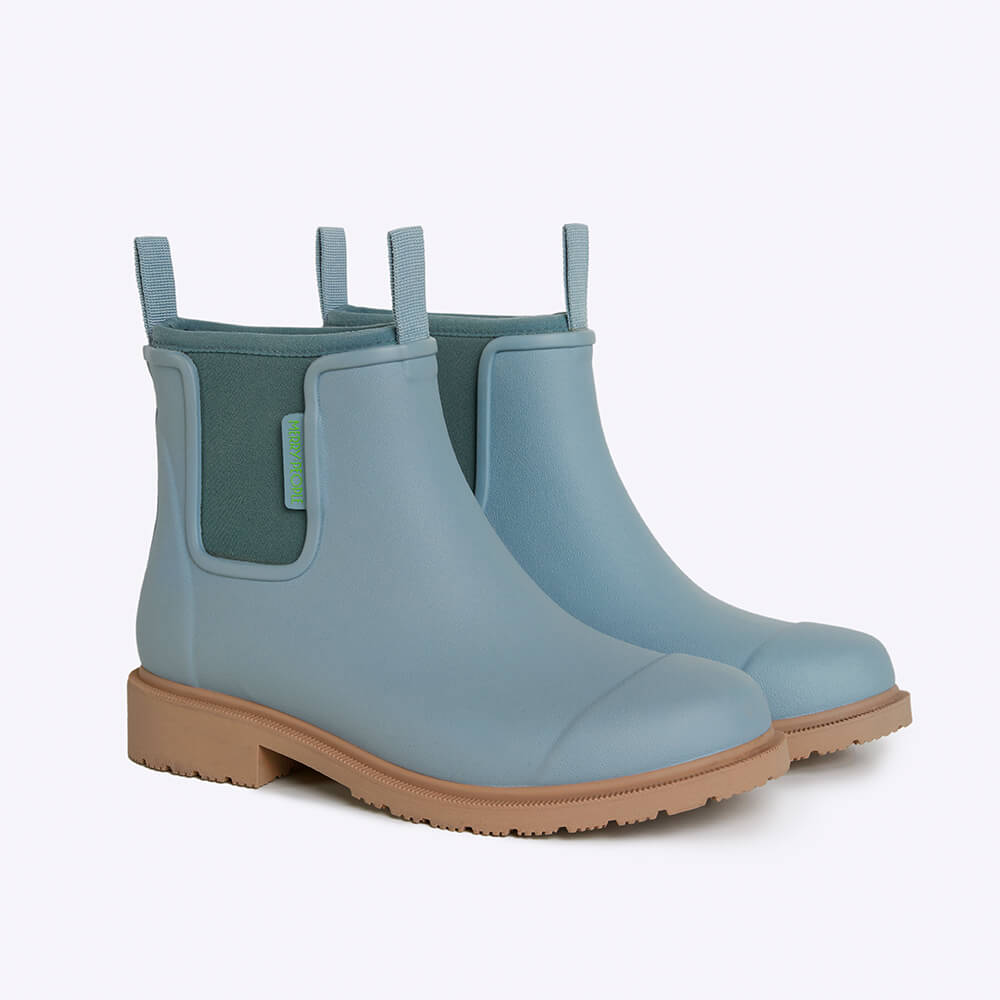
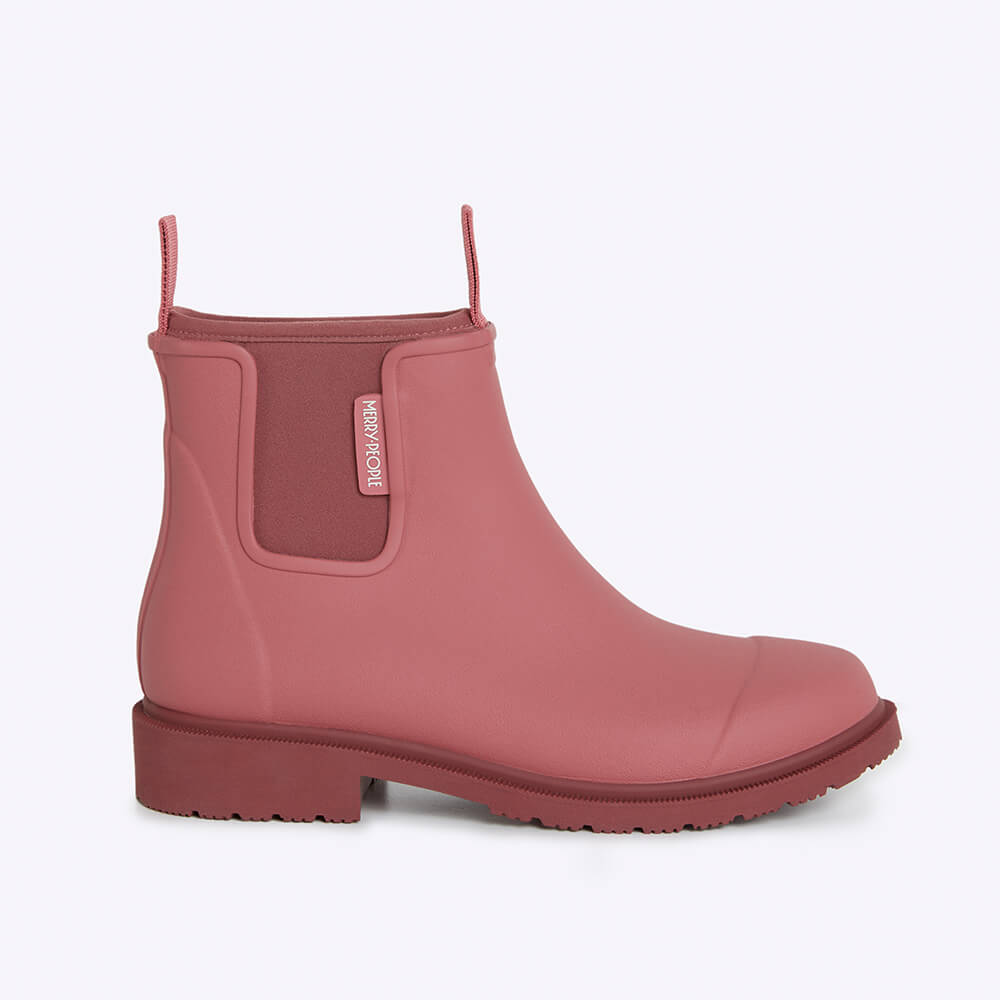
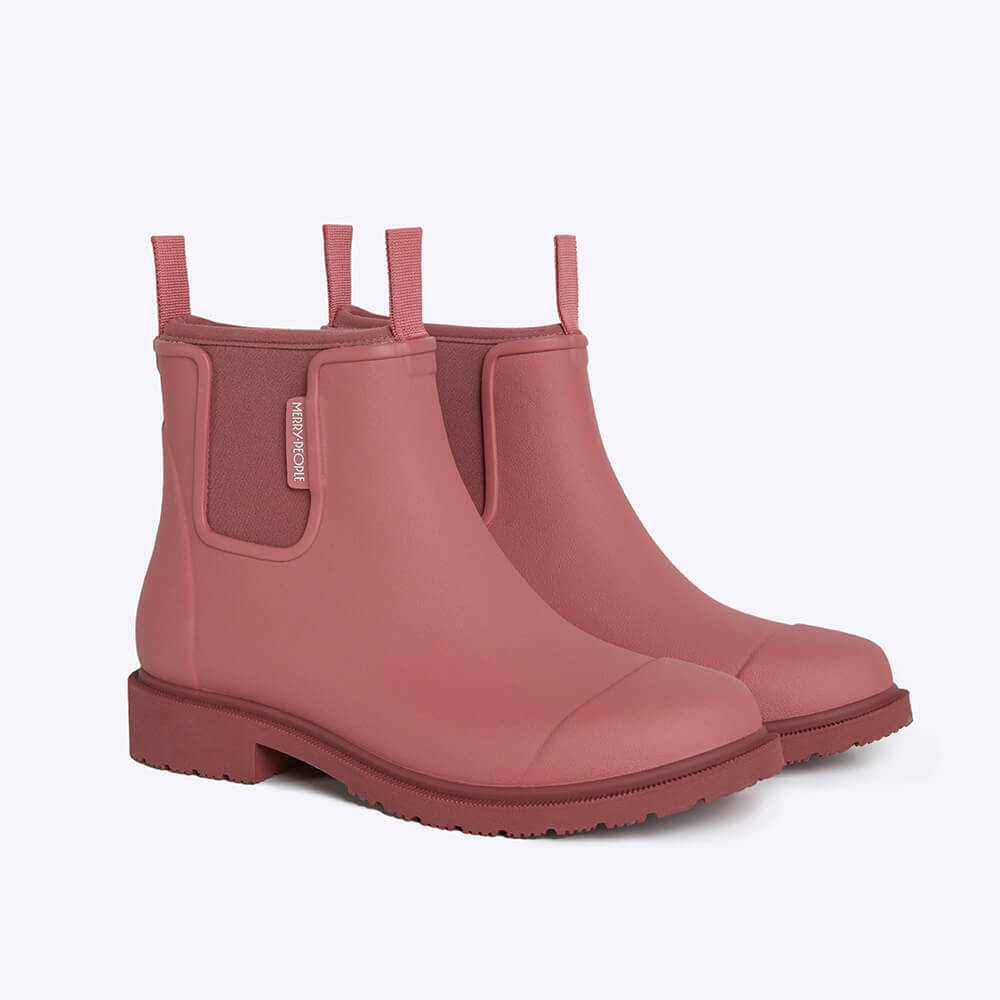
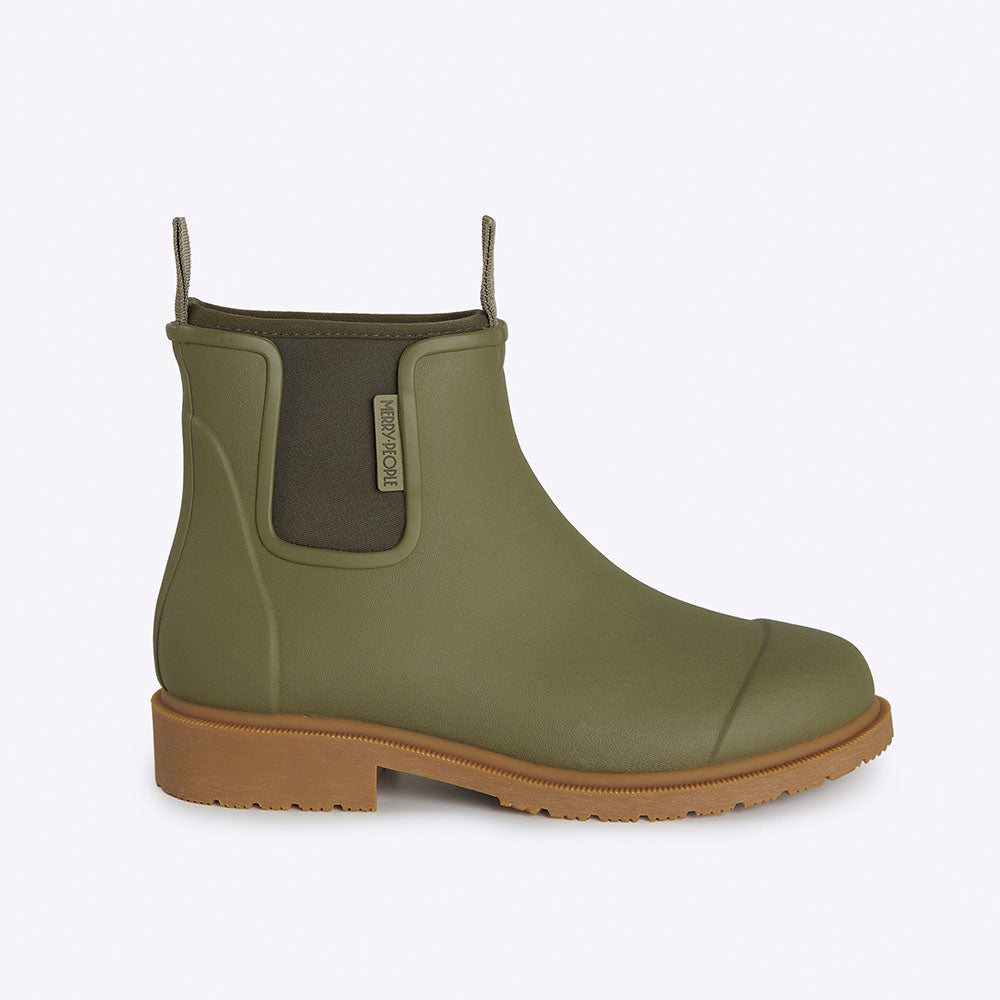
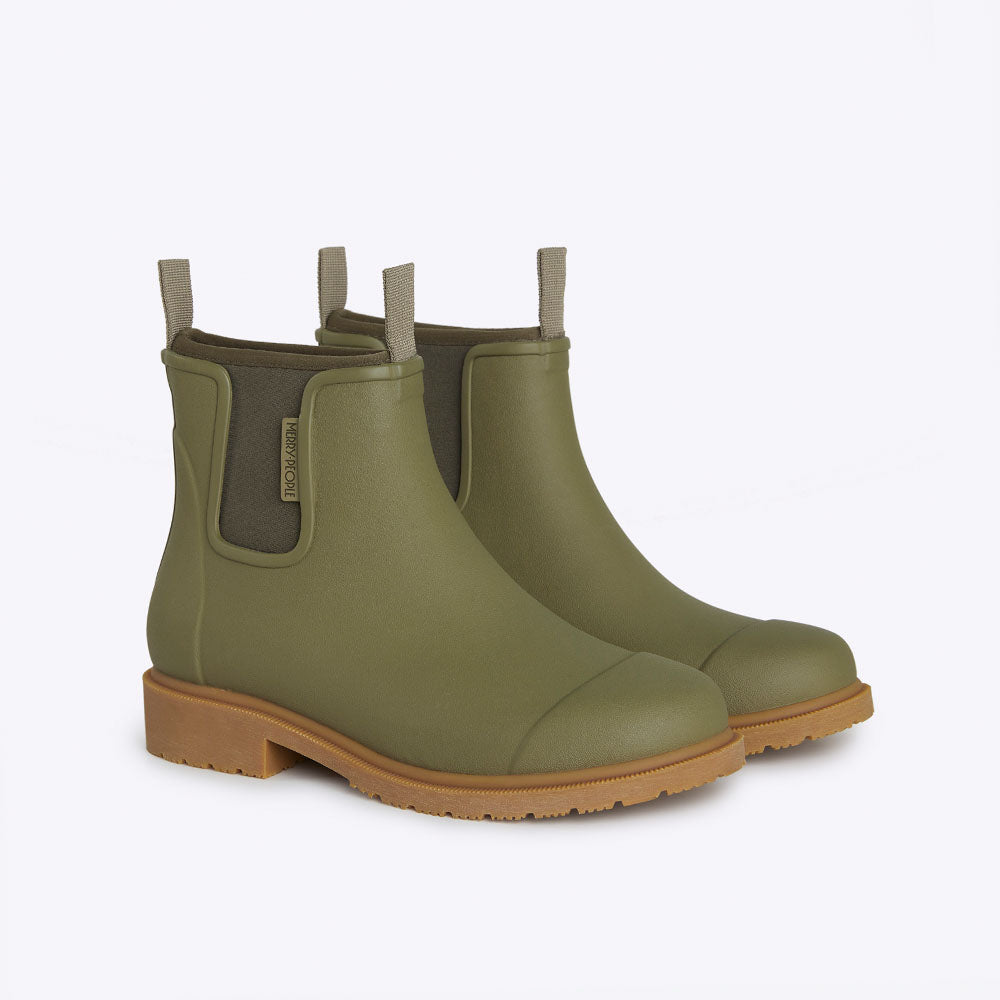
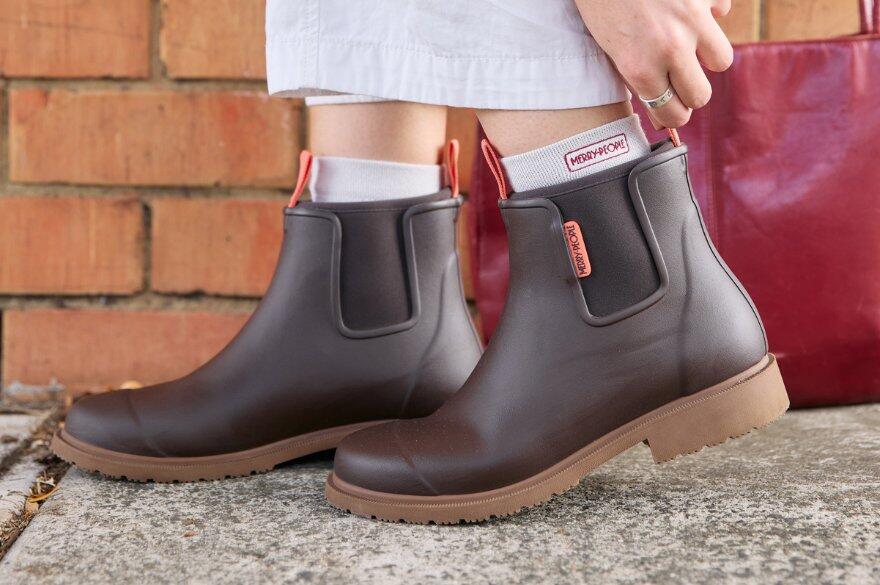
We’re a little biased, of course. Every pair of Merry People gumboots is crafted from 100% natural rubber, lined with a soft four-millimetre neoprene layer for warmth and cushioning, and built around the kind of long-term comfort our founder set out to create when she started the brand.
Natural rubber comes from the latex of the rubber tree (Hevea brasiliensis), a plant-based, vegan-friendly, biodegradable material that’s been used to make quality boots since the 1800s. PVC, by contrast, is a synthetic plastic produced in factories from petroleum by-products. Both can technically keep your feet dry, but only one of them stretches to your foot, holds up year after year, and feels good doing it.
In the rest of this guide, we’ll walk through how natural rubber gumboots are actually made, what PVC trades off, and how to spot the difference for yourself when you’re shopping. Plus, we’ll explore what to look for in a quality lining, sole and finish so you know what you’re getting. By the end, you’ll know exactly why the gumboots on your feet matter as much as the materials they’re made from!
Natural Rubber Gumboots
First, let’s chat about natural rubber! All Merry People gumboots are made with natural rubber outer and sole.
To be transformed from latex into rubber (and then into your gumboots), natural latex undergoes vulcanisation, a process developed and patented by Charles Goodyear of Goodyear tyres. Vulcanisation tempers the rubber and allows it to be easily moulded into other shapes.
From there, it is die-cast into the curved shapes of boots. This is a longer production process than the methods used in crafting PVC gumboots, but the result is higher quality insulation, softness, and anti-corrosion performance.
The latex of the rubber tree is naturally elastic, soft, and mouldable and it keeps those qualities after vulcanisation. This natural feature is what allows Merry People gumboots to soften, stretch and adapt to your foot with wear.
But, as anyone who has used a rubber band knows, this soft elasticity is still quite durable! Once natural rubber undergoes vulcanisation and is cast into a shape it will hold, even at extreme temperatures.
This is what allows us to rate our boots for below-freezing temperatures and allows our customers to wear their gumboots in the snow. Finally, as a product derived from nature, rubber is less toxic and damaging to produce and is biodegradable.
The durability, elasticity, and quality of natural rubber does come with trade offs in weight and cost. By its nature, rubber is a heavier material than PVC, meaning natural rubber gumboots are heavier than PVC gumboots.
The manual work involved in tapping latex from the rubber tree and processing it into rubber is also more expensive than the processes involved in fabricating PVC. This means that natural rubber gumboots are generally more expensive than PVC gumboots.
There is, however, a tradeoff to be made as the higher initial cost for durable natural rubber is paid off in the longevity of the material as your boots will not need to be replaced frequently. We believe strongly in the value behind durability and assessing the cost-per-wear of your gumboots and we stand by this with a one-year warranty on our boots.
PVC Gumboots
PVC is a lightweight synthetic plastic produced, in part, from petroleum. Creating PVC is a complex process involving lots of chemistry, but it is also now a very popular and inexpensive process used across a broad range of industries.
To convert PVC into boots, tiny pellets of PVC are melted into a liquid form, then poured around a boot mould in a process called ‘injection-moulding.’ Injection moulding is used for an array of projects, making it a relatively inexpensive process for fabrication and makes PVC boots a popular low-cost option for waterproofing and for those looking for light-weight boots.
The affordability and lightness of PVC does, however, come with trade-offs. Notably, PVC lacks the stretch of natural rubber and will not stretch to shape your foot.
This stiffness can lead to harsh edges on your gumboots and the common complaint that gumboots are uncomfortable. This also means that if your foot is not the standard width of a boot mould, you may find it difficult to fit your foot in the boot.
PVC is also less durable than rubber, so while it may be cheaper to purchase initially, they often do not last as long as natural rubber boots. This increases the cost-per-wear value as the boots may need to be replaced or repaired more frequently than natural rubber boots.
Hybrid Boots
Some manufacturers work around this by mixing in natural rubber with the PVC to create a hybrid shoe. This combo can keep the cost down, but still lacks the durability and longevity of using 100% natural rubber.
With so many different words used at all stages of production and marketing, ‘rubber’ has become an umbrella term for any plastic material that has a rubber-like feel (e.g., bouncy, elastic), so it’s important to double-check the components of your boots!
Choosing the Right Gumboots for You
Each material has its own pros and cons, so there is no ‘right’ answer to what material is best for your needs. Still, if you’re looking for durable, high-quality, natural rubber waterproof boots, be sure to check out our Bobbi Ankle Gumboots.
With more than 1,500 five-star reviews, the Bobbi is sure to carry you through all your daily adventures!